


Every supply chain leader knows the balancing act. Hold too much stock and cash becomes tied up in inventory. Hold too little, and customer service suffers. Add increasing market volatility, changing customer demand, and global supply chain disruption into the mix, and inventory management has never been more challenging.
The reality is that many organisations are still relying on disconnected systems, spreadsheets, or outdated planning methods that simply can't keep pace with today's business environment.
Let's explore some of the most common inventory management challenges, and how the right technology can solve them.
Too Much Inventory
Excess inventory might seem like a good problem to have, but it quickly becomes expensive.
Overstock ties up working capital, increases warehouse costs, and often results in obsolete or discounted stock. In fast-moving industries, products can lose value before they're ever sold.
The solution isn't simply ordering less, it's ordering smarter.
By combining historical sales data, seasonality, supplier lead times and demand forecasting, businesses can optimise stock levels without increasing risk.
Stockouts and Lost Sales
Running out of stock damages more than revenue.
Customers increasingly expect products to be available when they need them. Missed orders can quickly lead them to competitors, while emergency purchasing often increases operational costs.
Advanced forecasting tools help businesses maintain optimal stock levels by identifying future demand before shortages occur.
Limited Visibility Across the Supply Chain
Many organisations struggle because their inventory data exists in multiple places.
Warehouse systems, ERP platforms, spreadsheets and supplier information don't always tell the same story.
Without a single source of truth, planning becomes reactive instead of proactive.
When inventory visibility is centralised within Business Central, and enhanced by AGR's inventory optimisation platform, decision-makers gain real-time insights into stock performance, supplier reliability and replenishment requirements.
Forecasting Based on Guesswork
Demand forecasting has become significantly more complex.
Seasonality, promotions, economic conditions and changing customer behaviour all influence demand.
Traditional forecasting methods often rely heavily on historical averages or manual judgement.
Modern forecasting solutions use advanced analytics to identify trends, improve forecast accuracy and recommend optimal purchasing decisions.
This enables businesses to improve service levels while reducing excess inventory.
Manual Inventory Processes
Many inventory teams still spend hours maintaining spreadsheets, updating reorder points and manually reviewing stock levels.
These repetitive tasks not only consume valuable time but also increase the likelihood of human error.
Automation allows businesses to:
- Generate replenishment recommendations automatically
- Identify slow-moving inventory
- Monitor supplier performance
- Receive proactive alerts before issues arise
This allows planning teams to focus on strategic decisions rather than administrative work.
Responding to Supply Chain Disruption
Supplier delays, transportation issues and fluctuating demand have become the norm rather than the exception.
Businesses need planning tools that can quickly adapt when circumstances change.
Inventory optimisation platforms provide scenario planning and continuous forecasting, enabling organisations to react faster and make more informed purchasing decisions.
Why Technology Matters
Successful inventory management is no longer about simply tracking stock.
It's about using data intelligently to balance customer service, profitability and operational efficiency.
When businesses combine Microsoft Dynamics 365 Business Central with advanced inventory optimisation, they gain:
- Improved forecast accuracy
- Reduced inventory holding costs
- Better stock availability
- Increased visibility across the supply chain
- Faster, more informed decision making
- Greater resilience during market disruption
Here’s A Smarter Approach to Inventory Optimisation
At Dynavics, we believe technology should simplify operations and not complicate them.
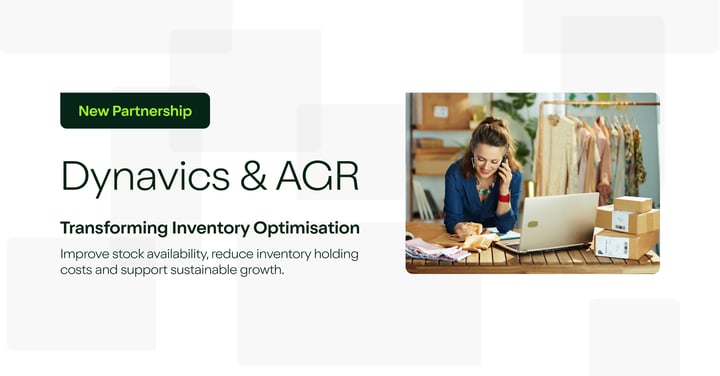
That's why we're excited to partner with AGR, bringing market-leading inventory optimisation capabilities to organisations already using, or planning to implement, Business Central.
Together, we help businesses move beyond basic inventory management, towards intelligent, data-driven planning that improves service levels, reduces costs and supports sustainable growth.
Whether you're struggling with stockouts, excess inventory or inaccurate forecasting, our combined expertise can help you build a more resilient supply chain.
Ready to optimise your inventory?
If you'd like to learn how Dynavics and AGR can help transform your inventory planning, get in touch with our team. We'd be happy to demonstrate how integrated inventory optimisation can deliver measurable business value.

Dynavics Newsletter
We would love to keep you informed of up-to-the-minute company, product and industry related information – as well as occasional promotions, offers and exclusive events.
Sign up to our monthly newsletter to stay in the loop!