


Times Are Changing
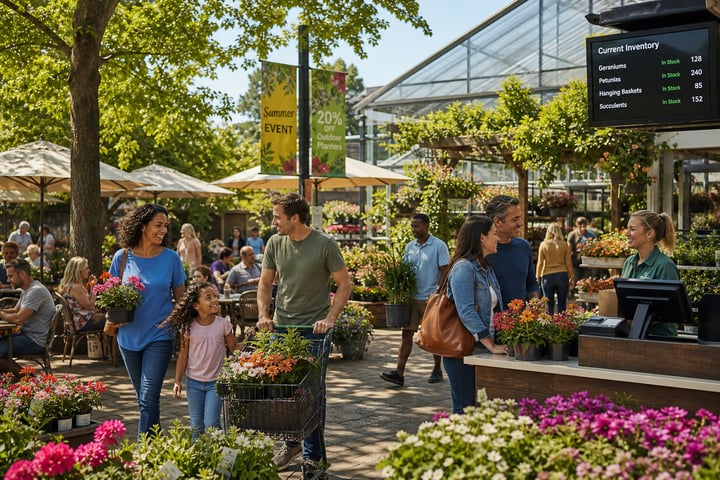
Garden centres have evolved from simple plant stores into day-out destinations. Many now run cafés, gift shops, aquatics, playgrounds, and seasonal attractions alongside their core horticulture ranges. Each new revenue stream adds another set of systems, spreadsheets, and manual processes. The result is a tangle of disconnected tools that makes it hard to see what is really happening across the business. This complexity is why more centres are turning to an ERP platform rather than relying on basic point solutions.
The Connected Experience
Business Central sits at the heart of operations, connecting tills, eCommerce, purchasing, finance, and reporting. Instead of separate systems for the café, events, loyalty, and web orders, there is a single source of truth for products, customers, and transactions. Real-time visibility is particularly powerful in horticulture. Seasonal stock like bedding plants, bulbs, and garden furniture moves fast and often varies by location.
With Business Central, you can see current levels, incoming deliveries, and sales trends for each category and site. For example, a centre using Business Central and LS Retail can track plant sell-through daily, spot overstocked lines by store, and run targeted promotions before items become dead stock.
Garden retailers are already seeing the benefit of consolidating systems; choosing Business Central to modernise finance and integrate POS and nursery systems, improving data flows and decision-making across their estates This kind of joined-up approach is becoming the norm for ambitious, experiential operators.
How Business Central Simplifies
Business Central centralises stock, café operations, event bookings, and loyalty programmes, so garden centres can manage plant batches, food and beverage, tickets, and promotions from the same platform. Integrated POS and eCommerce keep inventory and customer data accurate across in-store and online channels. On the shop floor, Business Central tracks plants, giftware, furniture, fertilisers, and chemicals with batch and expiry data where needed. This makes it much easier to comply with safety rules while still optimising stock levels. For instance, teams can quickly identify chemicals approaching expiry and prioritise markdowns, rather than discovering issues during a seasonal rush.
Integration with retail platforms like LS Retail means tills, self-checkout, and mobile POS are connected to the same back office. Many modern garden centres use LS Retail to unify expanding operations, covering retail, aquatics, events, and more. When combined with Business Central, this kind of setup gives a real-time picture of revenue and stock by department.
Café and restaurant operations benefit in the same way. Business Central can capture food and drink sales, manage recipes and ingredients, and track margins on popular menu items. A garden centre might discover that Sunday roasts drive higher average spend but lower margin than afternoon teas, prompting a change to pricing or portion sizes.
Because café data sits alongside retail data, managers can see the full value of a customer visit, not just what they buy in one department.
Maximise Seasons and Events
Events and ticketing are another growing area. By feeding bookings and attendance data into Business Central, centres can analyse which events fill up quickly, which time slots underperform, and how event customers spend in-store before and after the experience.
A Santa’s Grotto that sells out each year but generates little retail uplift might be redesigned with bundled offers or improved store flow. Loyalty programmes tie all of this together. Using LS Retail with Business Central, garden centres can offer points across garden, café, and giftware, then use purchase behaviour to target rewards. For example, frequent plant buyers could receive early access to spring stock, while café regulars might get weekday lunch incentives to smooth demand.
Because loyalty data is centralised, marketing teams avoid sending irrelevant offers and instead focus on repeatable, high-value journeys. Turning data into smarter decisions: forecasting, staffing, and seasonal success Business Central turns garden centre data into clear dashboards and forecasts, helping leaders plan stock, staffing, and budgets around seasonal peaks and unpredictable weather.
With tools like Jet Reports and Power BI, managers see live performance by category, location, and channel, then adjust purchasing and labour before issues appear.
Seasonality is one of the biggest challenges in horticulture and experiential retail. A run of sunny weekends can empty plant benches, while a wet spring can leave stock sitting and staff underused. Business Central’s forecasting and historical analysis help teams respond faster. By looking at multi-year sales patterns by week, weather, and promotion, buyers can set more accurate order quantities and reorder points.
For instance, a centre could use three years of Easter trading data to forecast bedding plant demand by week, then layer in local weather forecasts to refine staffing and opening hours. If the system shows that a warm Easter typically doubles café revenue, managers can schedule more kitchen and front-of-house staff while keeping non-essential tasks for quieter periods.
Effective Staff Planning
Labour management links directly to this planning. When Business Central is connected to payroll solutions like Sirius Payroll365, HR teams can manage seasonal contracts, overtime, and compliance in one flow. Instead of juggling timesheets and spreadsheets, they get a clear view of hours worked, labour costs per department, and upcoming peaks, making it easier to protect margins while maintaining service levels. Financially, Business Central helps garden centres track profitability across their growing mix of activities.
Managers can compare margins on plant sales versus café revenue, measure the ROI of major events, and see the impact of promotions by category. Jet Reports dashboards might highlight that a premium garden furniture range drives a small share of transactions but a large share of profit, informing decisions about floor space and marketing priorities.
Finally, integrated eCommerce data means online performance feeds into the same reporting. Inventory levels update automatically between the website and physical stores, reducing overselling and manual corrections. Centres can see which products customers research online before buying in-store, then tailor content, click-and-collect options, and cross-sells accordingly.
Over time, this unified view of data supports smarter decisions that keep the business resilient through changing seasons and customer expectations.
Discover More…
Let us help you get the most out of your business. We are always here to discuss all of the solutions discussed in this blog, just give us a call or request a chat here.

Dynavics Newsletter
We would love to keep you informed of up-to-the-minute company, product and industry related information – as well as occasional promotions, offers and exclusive events.
Sign up to our monthly newsletter to stay in the loop!